
Pickleball becomes much easier to follow once you know four things: where the serve goes, when the ball must bounce, what the non-volley zone means and how scoring works. Learn the shape of a rally first. The finer rules can come after you have played.
Know the court and basic equipment
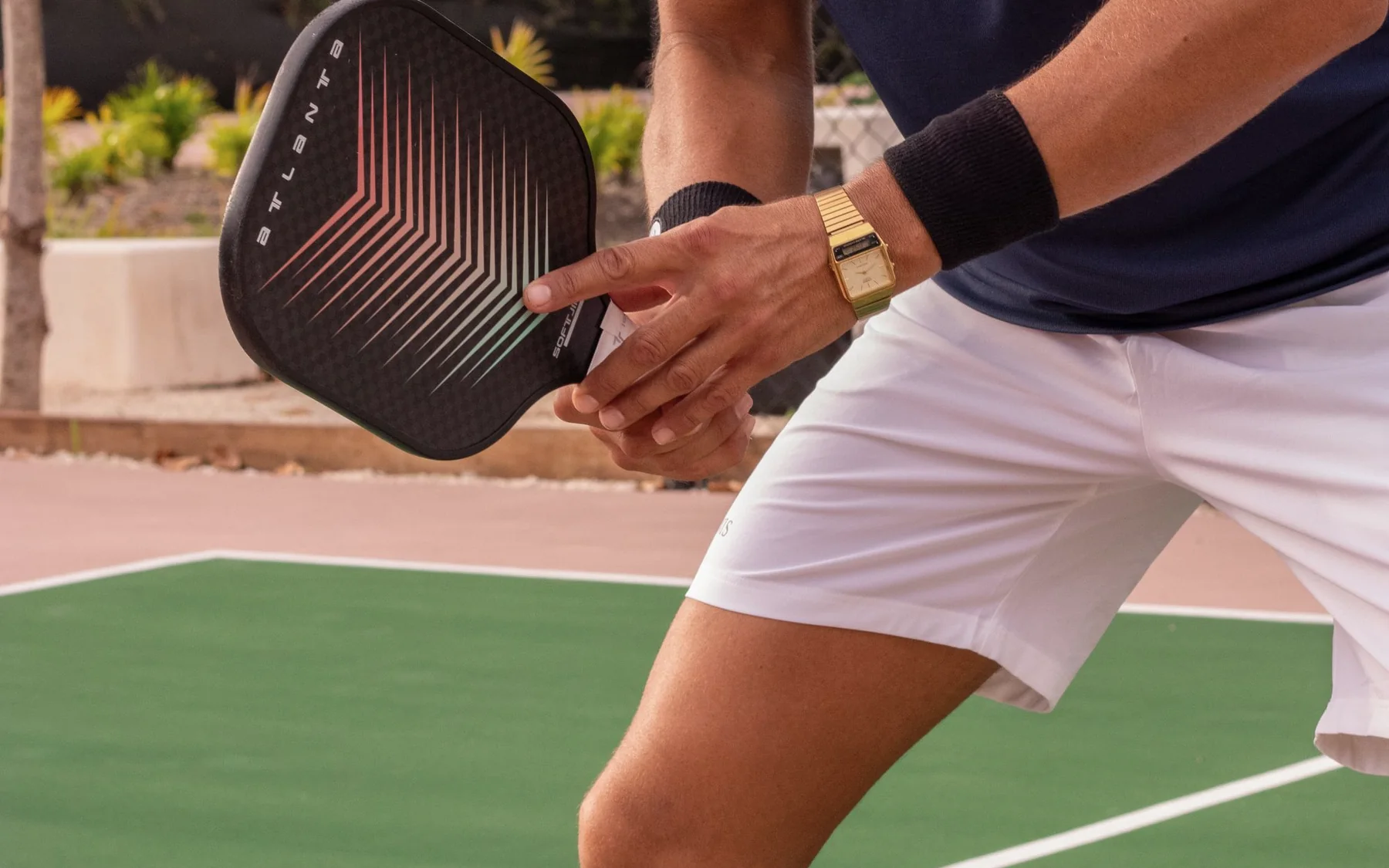
Pickleball uses a paddle, a perforated plastic ball and a court divided by a low net. It can be played as singles or doubles, with doubles common in social sessions. The area beside the net is the non-volley zone, often called the kitchen.
For a first session, ask whether the venue supplies paddles and balls. Wear comfortable court clothing and shoes suitable for changing direction on the playing surface. Check the venue's own equipment and footwear rules.
Learn the shape of a point
The serve is made underhand or with a drop serve and sent diagonally into the opposite service court. USA Pickleball's official rules set the precise requirements, so use the current rulebook for league or tournament play.
After the serve, the receiving team must let the ball bounce before returning it. The serving team must also let that return bounce before playing the next shot. After those two bounces, either side can volley where the non-volley-zone rules allow.
- Serve diagonally into the correct service court.
- Let the serve bounce before the return.
- Let the return bounce before the serving team plays again.
- Do not volley while standing in or touching the non-volley zone.
Keep scoring simple at first
Traditional side-out scoring generally allows only the serving team to score. Games are commonly played to 11 and won by two, although formats can vary. In doubles, the score call identifies the serving team's score, receiving team's score and server number.
Ask someone to call the score slowly during your first games. Scoring feels unusual at first, but it becomes clearer once it is tied to serving position and a live rally.
Choose a beginner-friendly session
Look for an introduction, coached beginner session or open play that clearly welcomes new players. Ask how rotation works, whether a skill rating is expected and whether there is a separate beginner court. Do not rely on the word ‘social’ alone.
Focus on keeping the ball in play, communicating with a doubles partner and learning safe court movement. Competitive tactics and a league can come later if that is what you enjoy.
Sources and further reading
This guide provides general information. Health and exercise needs vary, so seek qualified advice where appropriate.