
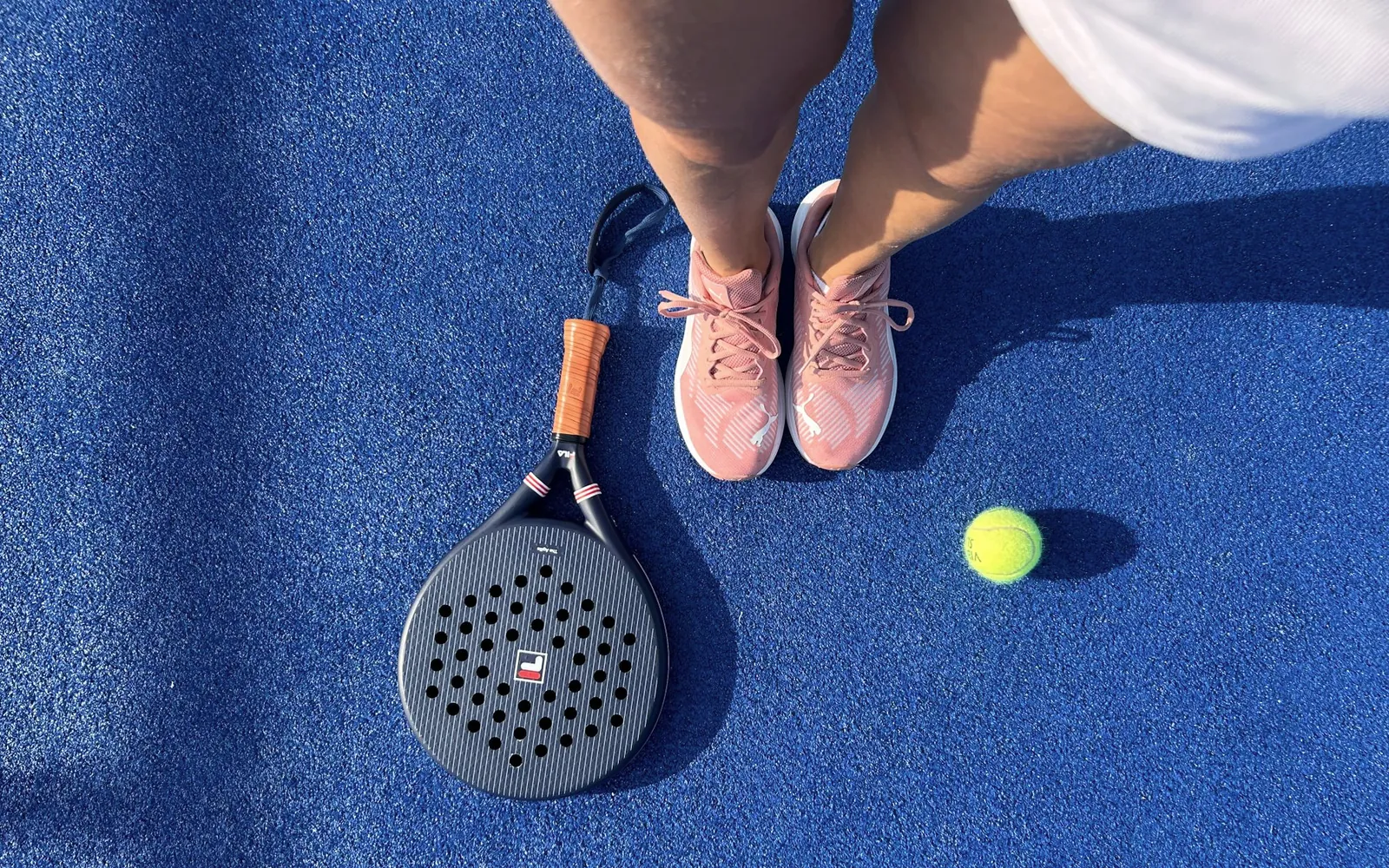
If you were looking for the enclosed-court sport often pronounced ‘paddle’, the name is spelled padel. It is separate from pickleball and has its own equipment and rules. Once you understand the underarm serve, the first bounce and how the glass can keep a rally alive, the game becomes much easier to follow.
Know what makes padel different
A full padel court is 20 metres long and 10 metres wide, divided by a net and surrounded by glass walls and fencing. The enclosed court is part of the game. After the ball bounces on the playing surface, it can rebound from a permitted wall and still be returned before its second bounce.
Padel uses a solid perforated racket and a ball that looks similar to a tennis ball but has lower pressure. Ask whether your venue supplies rackets and balls before buying equipment for a first session. Wear comfortable sports clothing and court shoes suitable for short starts, stops and changes of direction.
- The standard game is played as doubles.
- The court walls can become part of a live rally.
- The racket is solid and perforated rather than strung.
- Control and positioning matter more than immediate power.
Learn the shape of a point
A point begins with an underarm serve after the server bounces the ball. The ball is sent diagonally into the opposite service box. The International Padel Federation rulebook sets the exact serving height, position and fault requirements, so use the current rules for organised competition.
During a rally, the ball must reach the opponents' court correctly and bounce before it can use their surrounding wall. A player can return it before or after a permitted wall rebound, but not after a second floor bounce. For a first game, concentrate on recognising that sequence rather than memorising every unusual court situation.
Use the glass instead of fighting it
New players often rush forward and try to hit every ball before it reaches the back glass. Letting a suitable ball rebound can create more time and a more comfortable contact point. Start with slower feeds so you can learn where the ball travels after the bounce.
Move with your partner rather than leaving one player at the net and the other at the back without a plan. Short swings, a steady rally and a simple lob are more useful early skills than trying to finish every point with a hard smash.
Keep scoring and your first session simple
Traditional padel scoring follows the familiar tennis sequence of 15, 30, 40 and game, with games forming sets. Social sessions and competitions can use shorter or alternative formats, so confirm the scoring method with the organiser before play begins.
Choose an introduction or beginner session that explains safe movement, the serve, basic court positions and use of the glass. Tell the organiser that it is your first time and ask how partners rotate. Attach the racket's safety cord as instructed and focus on keeping a cooperative rally going.
- Does the venue provide a racket and balls?
- Is the session designed for complete beginners?
- Which scoring format will the group use?
- How are partners and courts rotated?
Sources and further reading
This guide provides general information. Health and exercise needs vary, so seek qualified advice where appropriate.