
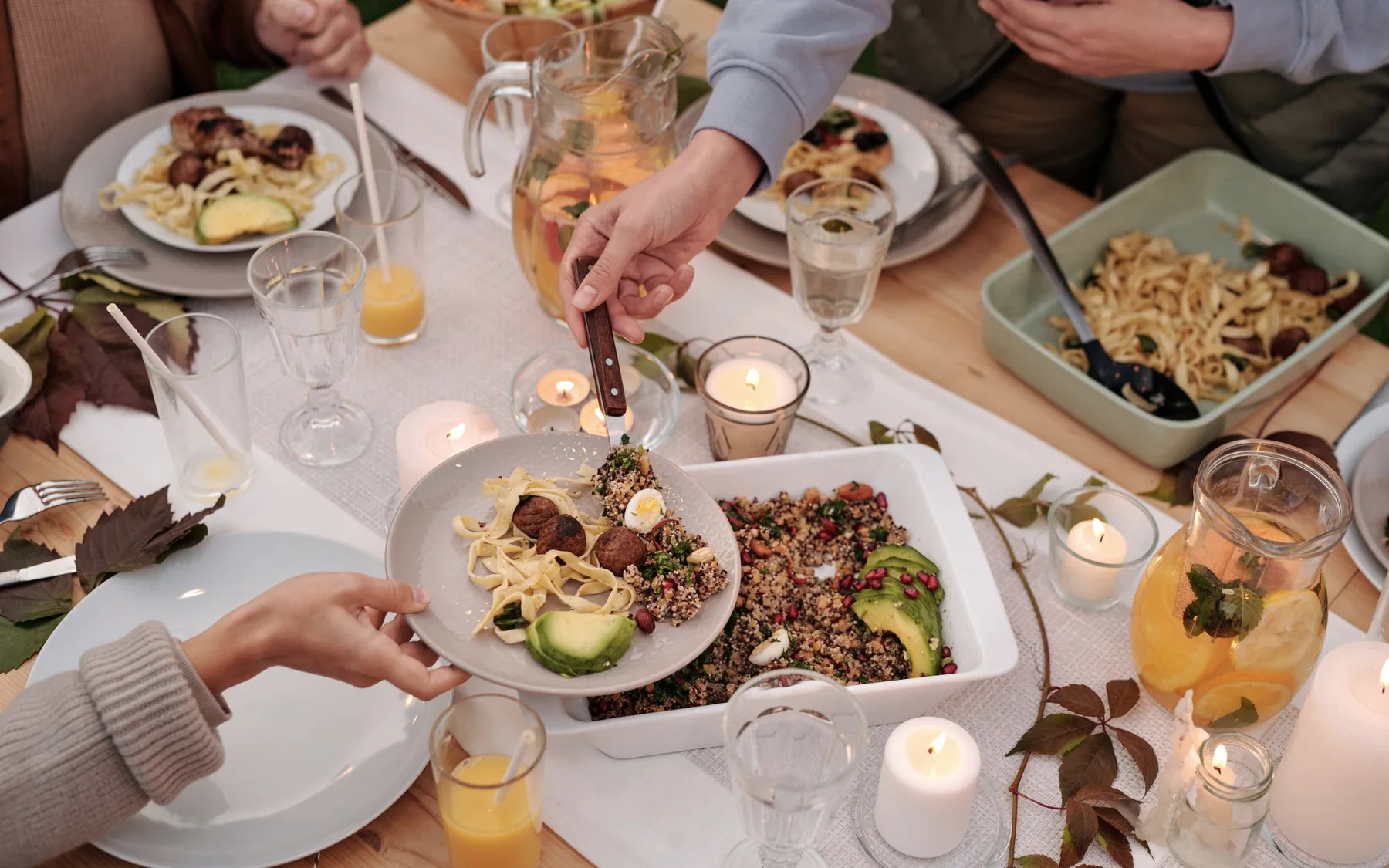
Food logging is easiest when there is a barcode, label or recipe. Real life is rarely that tidy. Family dinners, shared dishes and restaurant meals still belong in your record, even when the best answer is an honest estimate.
Aim for a useful record, not a perfect one
The purpose of a food diary is to make patterns easier to see. One imperfect estimate will not erase the value of the wider record. Describe what you can see, add anything you know, and keep the uncertainty visible rather than inventing precision.
A photograph can help you remember the components and approximate portion. It cannot reveal every ingredient, cooking fat or exact weight, so treat an image-based result as a starting estimate.
Use a quick three-part method
Start with the main components, then estimate the portion, then add the easy-to-miss extras. A simple description such as ‘chicken curry, one bowl, rice, cooked with coconut milk’ is more useful than selecting the first generic curry result and forgetting the context.
- Name the obvious components: protein, starch, vegetables and sauce.
- Use an everyday reference for portion size: bowl, handful, slice or half a plate.
- Add visible extras such as oil, dressing, cheese, drinks and sauces.
- Save a note if the estimate feels especially uncertain.
For shared dishes, work from the whole meal
If the cook can share the main ingredients, estimate the total recipe and divide it by the number of roughly equal servings. If servings were not equal, record your best fraction of the dish instead. The British Dietetic Association notes that appropriate portions vary between people, so visual references are a starting point rather than a personal prescription.
When you eat the same homemade meal again, reuse the saved entry and adjust the portion. Consistency in how you record repeat meals is often more helpful than rebuilding the estimate every time.
Know when more accuracy matters
If you are logging for general awareness, a reasonable estimate may be enough. If a clinician or registered dietitian has asked you to monitor intake for a medical reason, follow their method instead of relying on an image estimate.
Sources and further reading
This guide provides general information. Health and exercise needs vary, so seek qualified advice where appropriate.